Best Portable Power Stations for Home Backup (2026)
Suncis is reader-supported. If you buy through links on this page, we may earn a small commission at no extra cost to you. As an Amazon Associate, Suncis earns from qualifying purchases. Learn more.
When the power goes out, a portable power station is the easiest backup you can buy. There is no gas, no fumes, and no noise. You charge it from the wall (or from solar panels), and when the lights go off, you plug in your fridge, Wi-Fi, phones, and lights.
But the choices are confusing. Some models are the size of a lunchbox, others weigh more than 70 pounds. This guide explains what actually matters and which models are worth your money in 2026.
Quick picks
| Model | Capacity | Output | Weight | Best for |
|---|---|---|---|---|
| Anker SOLIX C1000 Gen 2 | 1,024Wh | 2,000W | 24.9 lb | Best overall for most homes |
| Jackery Explorer 1000 v2 | 1,070Wh | 1,500W | 23.8 lb | Easy, light, and reliable |
| EcoFlow DELTA 3 Classic | 1,024Wh | 1,800W | 26.7 lb | Best value, very fast charging |
| EcoFlow DELTA 2 Max | 2,048Wh | 2,400W | About 50 lb | Longer outages (1 day or more) |
| Jackery HomePower 3600 Plus | 3,584Wh | 3,600W | About 77 lb | Big outages, expandable to 21kWh |
| EcoFlow River 3 Plus | About 286Wh | 600W | About 10 lb | Small budget backup for Wi-Fi and phones |
Specs are from the manufacturers. Prices change often, so check the current price before you buy.
The 2 numbers that matter most
Capacity (Wh, watt-hours) is how much energy the battery holds. It tells you how long things will run. A 1,000Wh station can run a 100-watt device for about 8–9 hours (you lose some energy to conversion).
Output (W, watts) is how much power it can deliver at one time. It tells you what you can plug in. A fridge, a microwave, and a coffee maker all at once need a lot of watts.
Not sure how much you need? Read our guide: How Many Watts Do You Need During a Power Outage?
Best portable power stations for home backup
1. Anker SOLIX C1000 Gen 2: best overall
This is the one we would recommend to most families. It holds 1,024Wh, puts out 2,000W (enough for a fridge plus smaller devices), and weighs under 25 pounds. Its biggest strength is charging speed: Anker says it can fully recharge from the wall in about 49 minutes, which matters a lot when the power comes back for only a short time.
- Good for: fridge, Wi-Fi, lights, phones, TV, CPAP
- Not for: central AC, electric stove, or running the whole house
2. Jackery Explorer 1000 v2: easiest to own
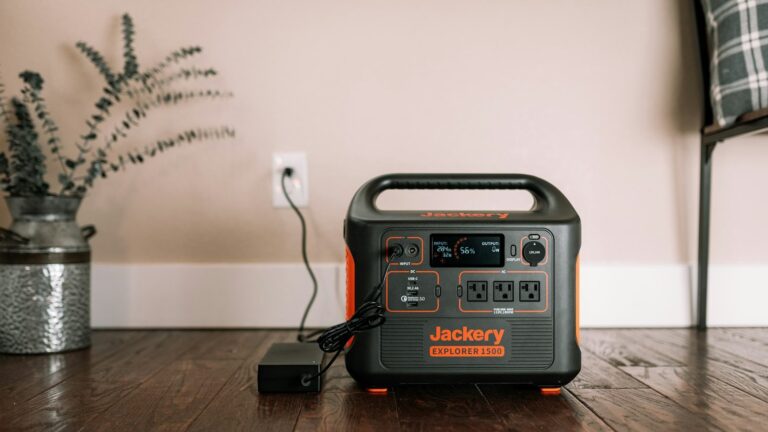
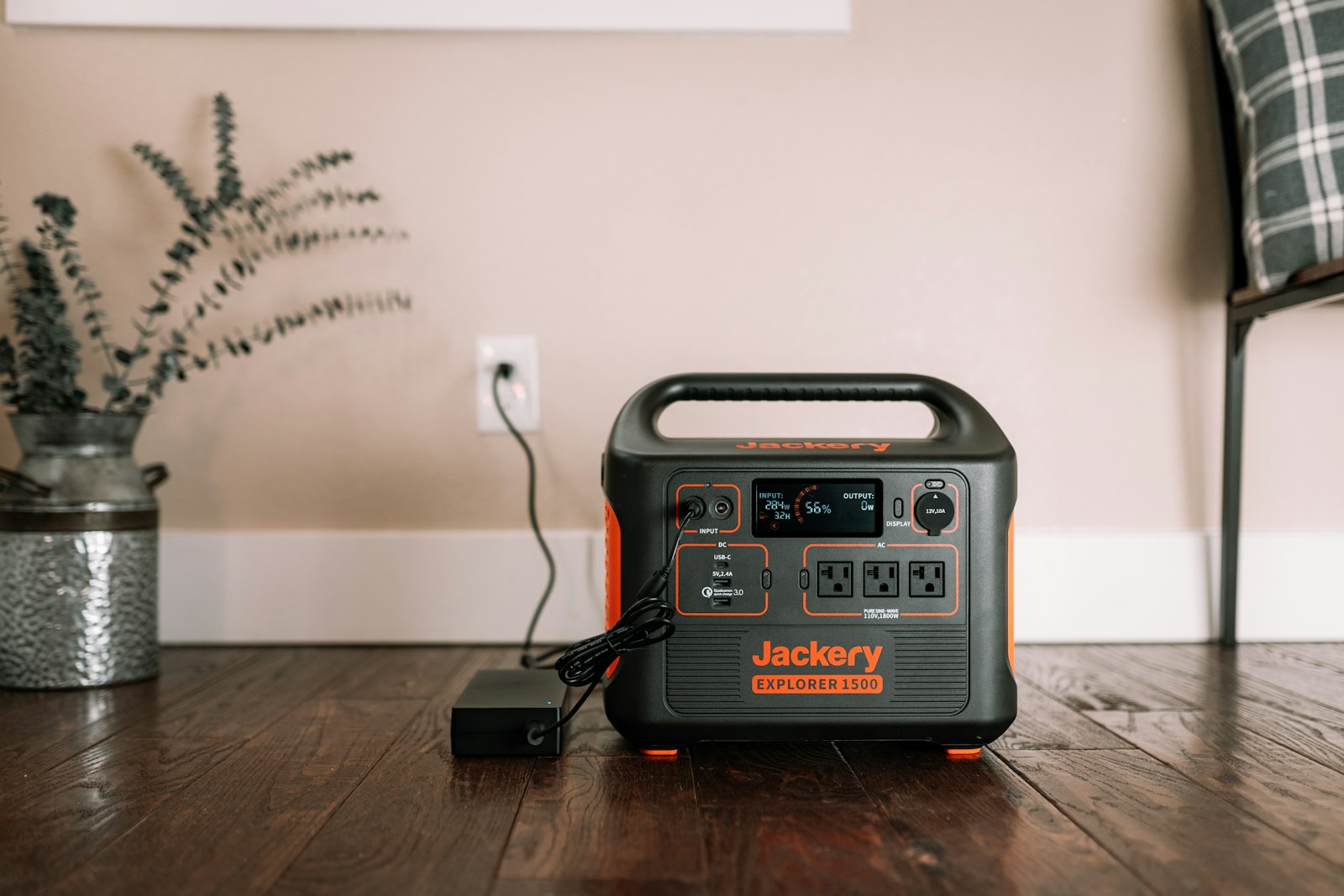
Jackery is one of the best-known names in portable power. The Explorer 1000 v2 holds 1,070Wh, delivers 1,500W, and weighs about 24 pounds. It uses a LiFePO4 battery, a long-lasting and safer battery type. A great choice if you want something simple that “just works.”
3. EcoFlow DELTA 3 Classic: best value
The DELTA 3 Classic gives you 1,024Wh and 1,800W, and it charges from a wall outlet to 80% in about 45 minutes. It can also act as a backup power supply (UPS): if the power cuts out, it switches to battery in under 10 milliseconds, so your Wi-Fi or computer stays on. One thing to know: you can’t add an extra battery to it later. If you want room to grow, look at the DELTA 2 Max below.
4. EcoFlow DELTA 2 Max: for longer outages
If storms in your area knock out power for a day or more, double the capacity. The DELTA 2 Max holds 2,048Wh with 2,400W output and can expand to about 6,000Wh. It can keep a typical fridge running for roughly a full day, plus your phones and Wi-Fi.
5. Jackery HomePower 3600 Plus: big backup
This is serious home backup: 3,584Wh, 3,600W continuous output, and 7,200W surge, expandable up to 21kWh. At about 77 pounds it is not something you carry around, but it has wheels and a handle. With a transfer switch installed by an electrician, it can power circuits in your home directly.
6. EcoFlow River 3 Plus: small and affordable
If you only need to keep Wi-Fi, phones, a lamp, and maybe a laptop running, a small station is enough. The River 3 Plus is light and can be expanded later. It will not run a fridge for long.
How to choose in 3 steps
- List what you must keep running. Fridge, Wi-Fi, phones, lights, medical devices.
- Pick your outage length. A few hours? Around 1,000Wh is enough. A full day or more? Look at 2,000Wh or larger, or plan to recharge with solar panels.
- Check the battery type. LiFePO4 (LFP) batteries last for thousands of charge cycles and are safer. Most good 2026 models use them.
Frequently asked questions
Can a portable power station run a refrigerator?
Yes. Most stations around 1,000Wh with at least 1,500W output can run a regular fridge. Expect roughly 10–15 hours, depending on the fridge and how often you open it.
Is it safe to use indoors?
Yes. Unlike gas generators, battery power stations make no exhaust, so they are safe to use inside your home. Keep them dry and away from heat.
Can I charge it with solar?
Yes. All the models above accept solar panels. A power station plus panels is often called a “solar generator.” See our comparison: Solar Generator vs Gas Generator.
The bottom line
For most homes, a 1,000Wh station like the Anker SOLIX C1000 Gen 2 or Jackery Explorer 1000 v2 covers the essentials during a typical outage. If your power stays out for a day or longer, step up to a 2,000Wh model like the EcoFlow DELTA 2 Max.