How Long Will a Power Station Run a CPAP? (Easy Runtime Chart)
Suncis is reader-supported. If you buy through links on this page, we may earn a small commission at no extra cost to you. As an Amazon Associate, Suncis earns from qualifying purchases. Learn more.
If you use a CPAP, a power outage isn’t just an annoyance. It can mean a night without your therapy. A portable power station can keep your machine running through the night, but only if you pick the right size. Here’s how to figure out how long a power station will run your CPAP, with a simple chart.
Important: a CPAP is a medical device. Talk with your doctor or equipment supplier about your backup plan, and always test your setup at home before you rely on it.
The simple formula
Runtime (hours) = battery size (Wh) × 0.85 ÷ your CPAP’s watts
The 0.85 accounts for energy lost when the power station turns battery power into wall-style AC power. It’s a safe planning number.
Example: a 500Wh power station running a CPAP that uses 40 watts:
500 × 0.85 ÷ 40 = about 10.6 hours. That’s more than one full night.
How many watts does a CPAP use?
The answer depends mostly on one thing: the heated humidifier.
| Setup | Typical power use | 8-hour night |
|---|---|---|
| CPAP only (no humidifier) | About 20–40 watts | About 160–320Wh |
| With heated humidifier or heated tube | About 60–90+ watts | About 480–720Wh |
These are typical ranges from manufacturer and industry guides. Your machine may differ based on pressure setting, mask fit and room temperature. The number printed on the power brick is the maximum, not what it normally uses.
Best way to know for sure: plug your CPAP into a simple plug-in watt meter (about $15–25) for one night and check the total.
CPAP runtime chart
Estimated hours of runtime on AC power, using the formula above:
| Power station size | 40W (no humidifier) | 60W (light humidity) | 90W (heated humidifier + tube) |
|---|---|---|---|
| 300Wh | About 6 hours | About 4 hours | About 3 hours |
| 500Wh | About 10.5 hours | About 7 hours | About 4.5 hours |
| 1,000Wh | About 21 hours | About 14 hours | About 9.5 hours |
What this means: a 500Wh unit covers one night without the humidifier. If you want heated humidity, or you want to cover 2–3 nights, look at the 1,000Wh class.
4 ways to make your battery last longer
- Turn off the humidifier and heated tube during an outage. This alone can cut power use by more than half.
- Use a DC cord if your CPAP supports it. Many CPAP makers sell a DC power cord or converter. Running on DC skips the AC conversion and saves energy. Only use the cord made or approved for your machine.
- Keep the power station charged. Top it up every month or two, and right away when a storm is coming.
- Don’t share it overnight. Running a fridge or space heater from the same unit will drain it fast. Save the battery for the CPAP while you sleep.
Which size should you buy?
- CPAP only, one night: a 300–500Wh unit may be enough. Bigger gives you a safety margin.
- With heated humidifier, or 2+ nights: choose a 1,000Wh-class unit.
- Long outages (several days): a 1,000Wh unit plus solar panels lets you recharge during the day.
A 1,000Wh unit is also useful for the rest of the house in an outage: phone charging, Wi-Fi, lights, and even running a fridge during the day.
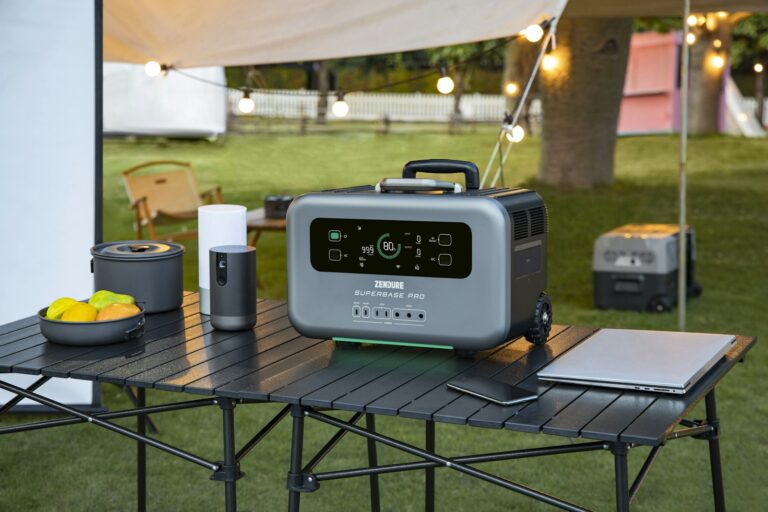
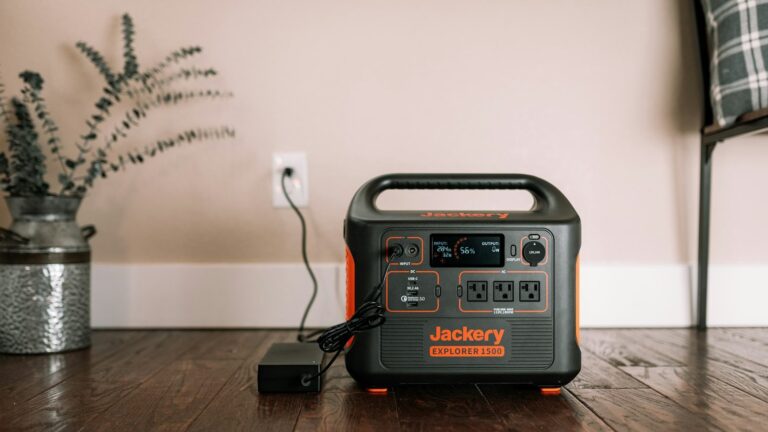
Good 1,000Wh-class choices
Both of these can switch to battery automatically when the power goes out (UPS-style), so your CPAP keeps running if the lights go off while you’re asleep.
Not sure which brand? See EcoFlow vs Jackery vs Bluetti.
Other tips for CPAP users
- Ask your utility whether it keeps a list of customers who rely on medical equipment. Some utilities offer extra notice before planned outages.
- Keep a printed copy of your CPAP settings and supplier phone number with your outage kit.
- Test once a year: run your CPAP from the power station for a full night so there are no surprises.
- Never use a gas generator indoors or in a garage. Carbon monoxide can kill. See our power outage checklist.
The bottom line
Most CPAPs use 20–40 watts without humidity and 60–90+ watts with it. A 500Wh power station usually covers one night without the humidifier, and a 1,000Wh unit gives you room for heated humidity or several nights. Measure your own machine, turn off the heater during outages, and test before you need it.